www.flickr.com
Showing posts with label Programming. Show all posts

How to kill your program's process in Task Manager (VB.NET/C#) ?

Saturday, December 14, 2013 Posted by Glenn 5 comments

Getting pretty baffled on your C# or vb.NET programs? Your program is in the process in task manager although all of the windows are already closed? I already made several "quite"-big projects in vb.NET and seriously, such problem is really a pain the arse. :) But now, I'm learning C# and currently developing my program called: "Employee Locator v2.0". Anyways, I would like to share this solution that I've recently found out. After an hour, I finally solved my problem haha!

By the way, this program opens first its splashscreen, which of course let the user be informed what is going on in the background. During such duration of splashing such splashscreen, the user can close the program instantly, just like in MS Office 2013. Now, as soon as the user clicks the X button, the program is supposed to be closed and cleared in the Task Manager.


Also, if the main window is to be closed by the user, the program shouldn't be displaying in the Task Manager Processes.
So, after several steps and changing of codes, I finally got the answered. In order to be sure: I executed these two steps:

1. As I've said, if the x button in the splashscreen is clicked, the whole program is killed! --- CHECKED!
2. If the Main Window is closed (X button is clicked), the whole program should also be killed! --- CHECKED!

SOLUTION:
1. Go to App.xaml, set your shutdownmode: (note that my StartupUri is set to my SplashScreen)

ShutdownMode="OnLastWindowClose"

2. In your MainWindow XAML, add this:

Closing="Window_Closing" Closed="Window_Closed"

3. Finally, make a closing handle event in your MainWindow.xaml.cs

       private void Window_Closing(object sender, System.ComponentModel.CancelEventArgs e)
        {
            System.Environment.Exit(0);
         }

        private void Window_Closed(object sender, EventArgs e)
        {
            System.Environment.Exit(0);
        }

There are lots of ways to solve this, I know :). In order to be sure and avoid more debugging, I just doubled my event handlers. The Window_Closing and the Window_Closed.

article by: Glenn Posadas

additional tags: WPF in C#.NET, how to handle closing events, how to close all the apps in C# and VB.NET, VB.NET/C# closing events, closing events in C# WPF, WPF C# close all process after closing windows, C# WPF SplashScreen problems.

Sharing is so Easy:
StumpleUpon DiggIt! Del.icio.us Blinklist Yahoo Furl Technorati Simpy Spurl Reddit Google Twitter FaceBook

Codes for Trapezoidal Rule in C and C++

Tuesday, October 15, 2013 Posted by Glenn 0 comments

 #include<stdio.h>  
 #include<conio.h>  
 #include<math.h>  
 float fn(float x)  
 {  
 sqrt(x);  
 return sqrt(x);  
 }  
 main()  
 {  
 int i,n;  
 float a,b,s=0,y=0,h;  
 printf("Enter the no of interval =");  
 scanf("%d",&n);  
 printf("Enter the lower limit=");  
 scanf("%f",&a);  
 printf("Enter the upper limit=");  
 scanf("%f",&b);  
 h=(b-a)/n;  
 for(i=1;i<=n-1;i++)  
 {  
 s=s+fn(a+i*h);  
 }  
 y=(fn(a)+fn(b)+2*s)*h/2;  
 printf("the value of y is=%f",y);  
 getch();  
 }  

-this source codes belongs to: the author of wbutassignmenthelp :)
-this source codes is ready for copy-paste to any IDE/compilers for C/C++. The quotations from the original website source confuse the compilers, I've already change them to the original quotation :)
additional tags: trapezoidal rule for C, trapezoidal rule for Cplusplus, C++, codes for Trapezoidal, trapezoidal source codes

Sharing is so Easy:
StumpleUpon DiggIt! Del.icio.us Blinklist Yahoo Furl Technorati Simpy Spurl Reddit Google Twitter FaceBook

How to compile java codes to .exe

Sunday, September 29, 2013 Posted by Glenn 0 comments

article by: Glenn Posadas
There are basically many ways to convert your Java source file (.java) or Java class file(.class) into an executable program (means double clicking then run or click+return) for windows.

By the way, I use exe4j and jar2exe ;)

One of these ways is by using a software that will convert your source codes into .exe file.
Example of converters you can use:

1. JSmooth
JSmooth is a Java Executable Wrapper. It creates native Windows launchers (standard .exe) for your java applications. It makes java deployment much smoother and user-friendly, as it is able to find any installed Java VM by itself.

Download: CLICK HERE (sourceforge)


2. Launch4j
Launch4j is a cross-platform tool for wrapping Java applications distributed as jars in lightweight Windows native executables. The executable can be configured to search for a certain JRE version or use a bundled one, and it's possible to set runtime options, like the initial/max heap size. The wrapper also provides better user experience through an application icon, a native pre-JRE splash screen, and a Java download page in case the appropriate JRE cannot be found.

Download: CLICK HERE (sourceforge)

3. JexePack
JexePack is a command line tool (great for automated scripting) that allows you to package your Java application (class files), optionally along with its resources (like GIF/JPG/TXT/etc), into a single compressed 32-bit Windows EXE, which runs using Sun's Java Runtime Environment. Both console and windowed applications are supported.

4. exe4j
exe4j is a Java exe maker that helps you integrate your Java applications into the Windows operating environment, whether they are service, GUI or command line applications.

Download: CLICK HERE

5. jartoExe1.8
Jar2Exe is a tool to convert jar files into exe files.

Download: CLICK HERE

Example:
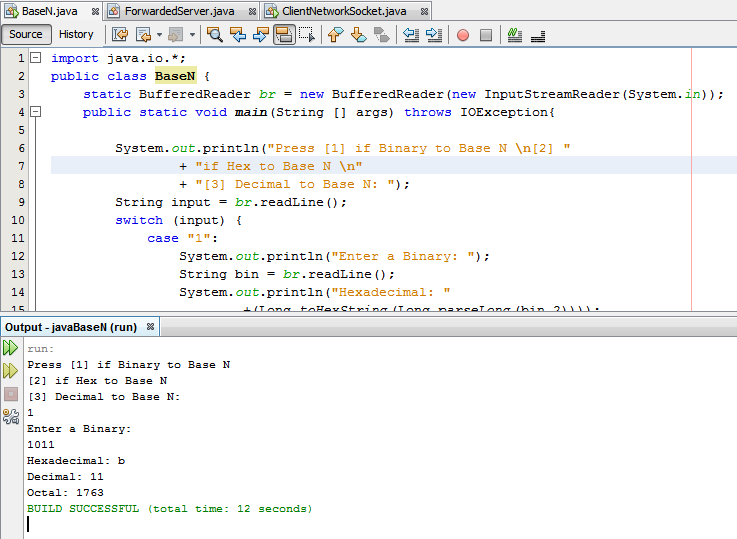
Let us convert this java code to .exe program


OUTPUT (in exe):


Please note that you have to locate your JAR file generated by your IDE/JAVA compiler.
In netbeans, right click the project > properties > Packaging > check the "compress jar file".
Jar file will be under your Dist folder.

(3PM, no lunch yet :( damn Java, I almost forgot how to wrap jar to .exe )

additional tags: If I have a Java source file (.java) or class file (.class). How can I convert it to an .exe file?, compile to exe java, java to exe, java to executable for windows, java to program for windows, conver all java codes to .exe form

Sharing is so Easy:
StumpleUpon DiggIt! Del.icio.us Blinklist Yahoo Furl Technorati Simpy Spurl Reddit Google Twitter FaceBook

Labels: ,

Zilog Microcontroller Programming 101

Tuesday, November 27, 2012 Posted by Glenn 0 comments


ZILOG 101
PART 1

Prepared by: Posadas, Glenn Von C.

Visit www.glennvon.com for more tutorials


Language of this post: Tagalog & English.
If you find this and you do not understand Tagalog, wait for my full-english post. Just Subscribe to my blog.
Okay, so I was hesitating lately. Saan ba mas maganda? Sa Powerpoint o sa Word? Kasi kung sa Word ko ito ilalagay, pwede ko ito mailagay sa website ko.
Anyways, I won’t and I can’t teach you how to exactly install the basic drivers and IDEs necessary for the Zilog ha? Wala akong microcontroller module dito. I use arduino for my projects at sa 5th year ko pa yang Zilog. So baka sa summer na ako bumalik diyan.

HERE ARE THE THINGS YOU ARE REQUIRED TO DOWNLOAD AND INSTALL:

Basically, all programming ang maituturo ko ditto. So let us begin.
THE C PROGRAMMING LANGUAGE BASICS
I bet medyo naaalala nyo pa ang unang una nyong programming language na C.
Example program. This will compile and display: “I love you”. By the way, don’t waste your time by running it. Quotations here in MS Word may confuse the compiler.


#include                              
#include
Int main(void)
{
                printf(“I love you”);
                getch();
}

EXPLANATION:
Yung katabi ng mga nasa #include, yan yung tinatawag na headers. Kaya nga may .h na nakalagay. Basically #include is a function that will include files, such as your headers or your other files. Kunwari, #include “this_is_my_second_function.c”
Now, what is the difference between “ “ and < > ? The quotation tells the reader that these are your own files. < > indicates, on the other hand that the file is in the compiler itself.
The int main(void) { } is our main function. Later on, I will show you how to make your own function such as delay.

VARIABLES & VARIABLE DECLARATIONS
Variables are used to store different types of data. Kumbaga sa Assembly Low level Programming language, ito ay isang registers. Parang sa microprocessor. Anyway, there are two types of variables (there are the two ways of declaring your variables inside your program.
1.      GLOBAL VARIABLES
2.      LOCAL VARIABLES

Now, ano anman ang pinagkaiba nitong dalawang ito? Ewan ko. Joke.
Global Variables – ito yung mga variables na nasa taas ng ating mga mga functions. Usually nasa itaas ng main function. Pero ang pinakamabisang pageexplain kung pano masasabi na ang isang variable ay globally declared ay sa pamamagitan ng pagtingin kung ito ay nasa ilalim ng mga headers. Magulo ba? Tsss.
Local Variables – ito yung mga variables na nasa loob ng isang certain functions.
Note that all local variables are merely accessible inside your function where it is declared. While the global variable, on the other hand, can be accessed by any of your functions anytime.
So, hindi ko na ieexplain yung “;” at yung mga uri ng DATA TYPES ha? Pero sige, konti lang. “;” ito ay yung tinawag kong TERMINATOR noong 2nd year college ako na nauso naman sa buong klase at until now ginagamit ng mga kakalse ko. Hindi ko talaga alam kung ano ang official na tawag dyan sa programming, basta ang term ko dyan ay terminator.
EXAMPLES OF DATA TYPES: float, int, bool, etc…

MACRO DEFINITIONS
Let us go to macro function for awhile. I learned this one when I was in 2nd year ulit. Hehehe. Effective ito lalo na kapag may exam ka at gusto mong mauna magpacheck. XD. Ito ay gamit sa pagpapaikli at pagdeclare ng CONSTANTS.
Macros are defined by the #define directive
Examples:
//this allows NUMBER to represent 3
#define NUMBER 3
//this allows SHOW to represent the printf() instruction
#define SHOW printf(“Hello World!”);

Commonly used data types

char(8 bits)
 int (16 bits)
 float (32 bits)

Array – a group of elements having the same data type
Example: char string[100] – an array named “string”
composed of 101 characters (from string[0] to string[100])

Variable Declarations
Variables are declared by the data type and variable name

if you want to continue reading this, download this full pdf file:


additional tags: full tutorial in zilog, z8 encore full tutorial, tutorial 101 in zilog, zilog hyperterminal, 101 in zilog, z8 encore full tutorial, pdf for z8, z8 pdf, z8 ebook, ebook tutorial for zilog 101, zilog 101 full ebook tutorial


Sharing is so Easy:
StumpleUpon DiggIt! Del.icio.us Blinklist Yahoo Furl Technorati Simpy Spurl Reddit Google Twitter FaceBook

My Android Hello World Program

Monday, October 29, 2012 Posted by Glenn 0 comments

Hi guys, I just successfully made this Hello World Program in Android Programming.
Basically, in android programming, you have or you will learn on how to program XML (though its not a programming language, its a mark up language just like the html); JAVA (the powerful one! oh yea!); C; OpenGL, and etc..

For me, as a beginner, it is quite hard to make such a program. :) But I can feel that I'll soon be able to familiarize in coding of android programs.

Anyway, here's the screen shot of my program HAHAHA. LOL. Basically, I just edited the String.XML file inside the values of my project.


The program says (in jejemon language lol): "EoowxZ PfuHhzxz Android Programming World" :))
so that's it!!!

additional tags: jejemon hellow owrld, hello world in jejemon, super basic android programming, android progeramming, my very first android program

Sharing is so Easy:
StumpleUpon DiggIt! Del.icio.us Blinklist Yahoo Furl Technorati Simpy Spurl Reddit Google Twitter FaceBook

Download Emu8086 with REAL Serial Key

Tuesday, August 7, 2012 Posted by Glenn 2 comments

So, how to download this emu8086 program for free?
Article by: Glenn Posadas

This emu8086 is cool, better than NASM, MASM or TASM.
I used to program in TASM. I write my assembly language codes and assemble and run them in TASM.
You can write your program in any format, whether in TASM, NASM, MASM format, they are all compatible in emu8086.

Also, in emu8086, you can see the REAL and ACTUAL steps that an assemble does. It means that you can simulate every interrupts in your program :)

TO DOWNLOAD this emu8086:

STEP 1: CLICK HERE!
or if that link isn't working, visit the emu8086 official website: http://ziplib.com/emu8086/

STEP 2: INSTALL the program

STEP 3: insert this key, (NOTE THIS IS FROM http://www.serialportal.com/d.php) That site is cool. :) they give real keys. Thanks to them!


User:ISHAAN,glaitm    Key:27R3VDEFYFX4N0VC3FRTQZX

THEN VOILA!!!! IF you really want to help the developers of the emu8086 program, then buy your very OWN serial key from them! :)
-glenn


additional tags: REAL serial key for emu8086 program, crack for emu8086 program, program cracked serial key emu8086, best serial key for emu8086, two pieces of emu8086 serial key, free real emu8086 program, real and free emu8086 free, free download emu8086 serial key, free download real emu8086 download serial key, free real emu8086 for free with crack, with serial key emu8086 for free

Sharing is so Easy:
StumpleUpon DiggIt! Del.icio.us Blinklist Yahoo Furl Technorati Simpy Spurl Reddit Google Twitter FaceBook

Complete Instruction Set and Instruction Timing of 8086 microprocessors

Sunday, August 5, 2012 Posted by Glenn 1 comments

APPENDIX C. INSTRUCTION SET AND INSTRUCTION TIMING OF 8086 Instruction Set of 8086 source: The X86 Microprocessors: Architecture and Programming (8086 to Pentium) In this table, the complete set of instructions of the 8086 has been listed, with their mnemonic and function. For knowing the details (format and examples) of each of the instruction, the section in the text book, where they are discussed is given in the third column of the table.


Data Transfer Instructions
MnemonicFunctionSectionTable
MOVMove byte or word to register or memory3.2.13.1
IN, OUTInput byte or word from port, output word to port5.23.1
LEALoad effective address3.2.23.1
LDS, LESLoad pointer using data segment, extra segment—3.1
PUSH, POPPush word onto stack, pop word off stack3.2.43.1
XCHGExchange byte or word—3.1
XLATTranslate byte using look-up table3.2.33.1


    1. Logical Instructions
      MnemonicFunctionSectionTable
      NOTLogical NOT of byte or word (one's complement)—3.7
      ANDLogical AND of byte or word—3.7
      ORLogical OR of byte or word—3.7
      XORLogical exclusive – OR of byte or word—3.7
      TESTTest byte or word (AND without storing)—3.7

      Shift and Rotate Instructions
      MnemonicFunctionSectionTable
      SHL, SHRLogical shift left, right byte or word by 1 or CL3.6.13.8
      SAL, SARArithmetic shift left, right byte or word by 1 or CL4.7.33.8
      ROL, RORRotate left, right, byte or word by 1 or CL3.6.23.8
      RCL, RCRRotate left, right, through carry, byte or word by 1 or CL3.6.23.8

      Arithmetic Instructions
      MnemonicFunctionSectionTable
      ADDAdd byte or word3.4.23.4
      SUBSubtract byte or word3.4.33.4
      ADCAdd byte or word and carry3.4.23.4
      SBBSubtract byte or word and carry (borrow)3.4.33.4
      INCIncrement byte or word3.4.23.4
      DECDecrement byte or word3.4.33.4
      NEGNegate byte or word (two's complement)—3.4
      CMPCompare byte or word (subtract without storing)3.4.43.4
      MULMultiply byte or word (unsigned)3.4.53.4
      DIVDivide byte or word (unsigned)3.4.63.4
      IMULInteger multiply byte or word (signed)4.7.23.4
      IDIVInteger divide byte or word (signed)4.7.23.4
      CBW, CWDConvert byte to word, word to double word4.73.4
      AAAASCII adjust for addition4.5.13.4
      AASASCII adjust for subtraction4.5.23.4
      AAMASCII adjust for multiplication4.5.33.4
      AADASCII adjust for division4.5.33.4
      DAA, DASDecimal adjust for addition, subtraction (binary coded decimal numbers)4.4.23.4

      Jump and Loop Instructions
      MnemonicFunctionSectionTable
      JMPUnconditional jump3.3.1 and 3.3.2—
      JA (JNBE)Jump if above (not below or equal)—3.3
      JAE (JNB)Jump if above or equal (not below)—3.3
      JB (JNAE)Jump if below (not above or equal)—3.3
      JBE (JNA)Jump if below or equal (not above)—3.3
      JE (JZ)Jump if equal (zero)—3.3
      JG (JNLE)Jump if greater (not less or equal)—4.2
      JGE (JNL)Jump if greater or equal (not less)—4.2
      JL (JNGE)Jump if less (not greater nor equal)—4.2
      JLE (JNG)Jump if less or equal (not greater)—4.2
      JC, JNCJump if carry set, carry not set—3.3
      JO, JNOJump if overflow, no overflow—4.2
      JS, JNSJump if sign, no sign—4.2
      JNP (JPO)Jump if no parity (parity odd)—3.3
      JP (JPE)Jump if parity (parity even)—3.3
      LOOPLoop unconditional, count in CX3.3.3—
      LOOPE (LOOPZ)Loop if equal (zero), count in CX3.3.3—
      LOOPNE (LOOPNZ)Loop if not equal (not zero), count in CX3.3.3—
      JCXZJump if CX equals zero—3.3

      Call and Return Instructions
      MnemonicFunctionSectionTable
      CALL, RETCall, return from procedure4.2.2 and 4.2.3—
      INT, INTOSoftware interrupt, interrupt if overflow8.3 and 8.2.5—
      IRETReturn from interrupt8.1.1—

      String Instructions
      MnemonicFunctionSectionTable
      MOVSMove byte or word string4.1.14.1
      CMPSCompare byte or word string4.1.24.1
      SCASScan byte or word string4.1.34.1
      LODS, STOSLoad, store byte or word string4.1.44.1
      REPRepeat—4.1
      REPE, REPZRepeat while equal, zero—4.1
      REPNE, REPNZRepeat while not equal (not zero)—4.1

      Processor and Flag Control Instructions
      MnemonicFunctionSectionTable
      STC, CLC, CMCSet, clear, complement carry flag3.4.1—
      STD, CLDSet, clear direction flag—4.1
      STI, CLISet, clear interrupt enable flag——
      LAHF, SAHFLoad AH from flags, store AH into flags—3.1
      PUSHF, POPFPush flags onto stack, pop flags off stack—3.1
      ESCEscape to external processor interface13.2.1—
      LOCKLock bus during next instruction6.4.4—
      NOPNo operation (do nothing)6.5.1—
      WAITWait for signal on TEST input13.2.1—
      HLTHalt processor6.3.5—
    2. Instruction Timing of 8086
      1. Number of cycles expended in calculating the 'Effective Address'
        No.Addressing modeNo. of clocks for calculation of EA
        1Direct6
        2Register indirect5
        3Register relative9
        4Based indexed with BP as the base register8
        5Based indexed with BX as the base register7
        6Relative based indexed with BP as the base register12
        7Relative based indexed with BX as the base register11
      2. Number of clock cycles expended for each instruction of 8086
        CodeDescription8086
        AAAASCII adjust for addition8
        AADASCII adjust for division60
        AAMASCII adjust for multiplication83
        AASASCII adjust for subtraction8
        ADCAdd with carry
         reg to reg3
         mem to reg9+EA
         reg to mem16+EA
         immed to reg4
         immed to mem17+EA
         immed to acc4
        ADDAddition
         reg to reg3
         mem to reg9+EA
         reg to mem16+EA
         immed to reg4
         immed to mem17+EA
         immed to acc4
        ANDLogical AND
         reg to reg3
         mem to reg9+EA
         reg to mem16+EA
         immed to reg4
         immed to mem17+EA
         immed to acc4
        CALLCall a procedure
         intrasegment direct19
         intrasegment direct
         through register16
         intrasegment direct
         through memory21+EA
         intrasegment direct28
        CBWConvert byte to word2
        CLCClear carry flag2
        CLDClear direction flag2
        CLIClear interrupt flag2
        CMCComplement carry flag2
        CMPCompare
         reg to reg3
         mem to mem9+EA
         reg to mem9+EA
         immed to reg4
         immed to mem10+EA
         immed to acc4
        CMPS/Compare string/
        CMPSB/Compare byte string/
        CMPSWCompare word string
         Not repeated22
         REPE/REPNE CMPS/CMPSB/CMPSW9+22/rep
        CWDConvert word to doubleword5
        DAADecimal adjust for addition4
        DASDecimal adjust for subtraction4
        DECDecrement by 1
         16-bit reg3
         8-bit reg3
         memory15+EA
        DIVUnsigned division
         8-bit reg80–90
         16-bit reg144–162
         8-bit mem(86–96)+EA
         16-bit mem(150–168)+EA
        ESCEscape
         reg2
         mem8+EA
        HLTHalt2
        IDIVInteger division
         8-bit reg101–112
         16-bit reg165–184
         8-bit mem(107–118)+EA
         16-bit mem(171–190)+EA
        IMULInteger multiplication
         8-bit reg80–98
         16-bit reg128–154
         8-bit mem(86–104)+EA
         16-bit mem(134–160)+EA
        INInput from I /O port
         Fixed port10
         Variable port through DX8
        INCIncrement by 1
         16-bit reg3
         8-bit reg3
         mem15+EA
        INTInterrupt
         type=352
         type351
        INTOInterrupt if overflow
         interrupt taken53
         interrupt not taken4
        IRETReturn from interrupt32
        JA /Jump if above /16, noj 4
        JNBEJump if not below or equal
        JAE /Jump if above or equal16, noj 4
        JNBJump if not below/
        JNAJump if not above
        JCXZJump if CX is Zero18, noj 6
        JE/Jump if equal /16, noj 4
        JZJump if Zero
        JG/Jump if greater16, noj 4
        JNLEJump if not less, or equal
        JGE/Jump if greater or equal /16, noj 4
        JNLJump if not less
        JL /Jump if less/16, noj 4
        JNGEJump if not greater, or equal
        JLE/Jump if less or equal /16, noj 4
        JNGJump if not greater
        JMPJump
         intrasegment direct short15
         intrasegment direct15
         intersegment direct15
         intrasegment indirect
         through memory18+EA
         intrasegment indirect
         through register11
         intrasegment indirect24+EA
        JNE/Jump if not equal /16, noj 4
        JNZJump if not Zero
        JNOJump if not overflow16, noj 4
        JNP/Jump if not parity/16, noj 4
        JPOJump if parity odd
        JNSJump if not sign16, noj 4
        JOJump if overflow16, noj 4
        JP/Jump if parity/16, noj 4
        JPEJump if parity even
        JSJump if sign16, noj 4
        LAHFLoad AH from flags4
        LDSLoad pointer using DS/
        LESLoad pointer using ES16+EA
        LEALoad effective address2+EA
        LOCKLock bus2
        LODS/Load string/
        LODSBLoad byte string
        LODSWLoad word string
         not repeated12
         repeated9+13/rep
        LOOPLoop17, noj 5
        LOOPE/Loop if equal /
        LOOPZLoop if zero18, noj 6
        LOOPNE /Loop if not equal /
        LOOPNZLoop if not zero19, noj 5
        MOVMove
         acc to mem10
         mem to acc10
         reg to reg2
         mem to reg8+EA
         reg to mem9+EA
         immed to reg4
         immed to mem10+EA
         reg to SS/DS/ES2
         mem to SS /DS /ES8+EA
         segment reg to reg2
         segment reg to mem9+EA
        MOVS/Move string /
        MOVSB/Move byte string/
        MOVSWMove word string
         Not repeated18
         REP MOVS/MOVSB/MOVSW9+17/rep
        MULUnsigned multiplication
         8-bit reg70–77
         16-bit reg118–133
         8-bit mem(76–83)+EA
         16-bit mem(124–139)+EA
        NEGNegate
         reg3
         mem16+EA
        NOPNo operation3
        NOTLogical NOT
         reg3
         mem16+EA
        ORLogical OR
         reg to reg3
         mem to reg9+EA
         reg to mem16+EA
         immed to acc4
         immed to reg4
         immed to mem17+EA
        OUTOutput to I /O port
         fixed port10
         varible port8
        POPPop word off stack
         reg8
         segment reg8
         memory17+EA
        POPFPop flags off stack8
        PUSHPush word onto stack
         reg11
         segment reg:ES/SS/CS10
         memory16+EA
        PUSHDPush double flag onto stack10
        RCLRotate left through carry /
         Rotate right through carry /
         reg with single-shift2
         reg with variable-shift8+4 / bit
         mem with single-shift15+EA
         mem with variable-shift20+EA+4 / bnit
        RETReturn from procedure /
        RETFReturn far /
        RETNReturn near
         intrasegment16
         intrasegment with constant20
         intrasegment26
         intrasegment with constant25
        ROL/Rotate left
        RORRotate right
         reg with single-shift2
         reg with variable-shift8+4 / bit
         mem with single-shift15+EA
         mem with variable-shift20+EA+4 /bit
        SAHFStore AH into flags4
        SAL/Shift arithmetic left /
        SAR /Shift arithmetic right /
        SHL/Shift logical left /
        SHRShift logical right
         reg with single-shift2
         reg with variable-shift8+4/ bit
         mem with single-shift15+EA
         mem with variable shift20+EA+4 / bit
        SBBSubtract with borrow
         reg from reg3
         mem from reg9+EA
         reg from mem16+EA
         immed from acc4
         immed from reg4
         immed from mem17+EA
        SCAS/Scan string /
        SCASBScan byte string
        SCASWScan word string
         not repeated15
         REPE /REPNE SCAS /SCASB /SCASW9+15/rep
        STCSet carry flag2
        STDSet direction flag2
        STISet interrupt flag2
        STOS/Store string /
        STOSB/Store byte string /
        STOSWStore word string
         Not repeated11
         REP STOS/STOSB/STOSW9+10/rep
        STRStore task register
        SUBSubtraction
         reg from reg3
         mem from reg9+EA
         reg from mem16+EA
         immed from acc4
         immed from reg4
         immed from mem17+EA
        TESTTest
         reg with reg3
         mem with reg9+EA
         immed with acc4
         immed with reg5
         immed with mem11+EA
        WAITWait while TEST pin
         not asserted4
        XADDExchange and add
        XCHGExchange
         reg with acc3
         reg with mem17+EA
         reg with reg4
        XLAT/Translate11
        XORLogical exclusive OR
         reg with reg3
         mem with reg9+EA
         reg with mem16+EA
         immed with acc4
         immed with reg4
         immed with mem17+EA

additional tags: 8086 microprocessors instruction, instruction sets, instruction sets for 8086, instruction complete set, instruction set complete for 8086, assembly language instruction set, complete 8086 instruction sets microprocessors, complete instruction timing and instruction sets for 8086 microprocessors.

Sharing is so Easy:
StumpleUpon DiggIt! Del.icio.us Blinklist Yahoo Furl Technorati Simpy Spurl Reddit Google Twitter FaceBook